On this page
Finding damage on a parked car raises practical questions: which coverage might apply, what should you document, and how will you get around during repairs? This Waimalu guide explains vehicle strikes, theft, vandalism and falling-object claims, with fictional examples and a checklist for speaking with your insurer.
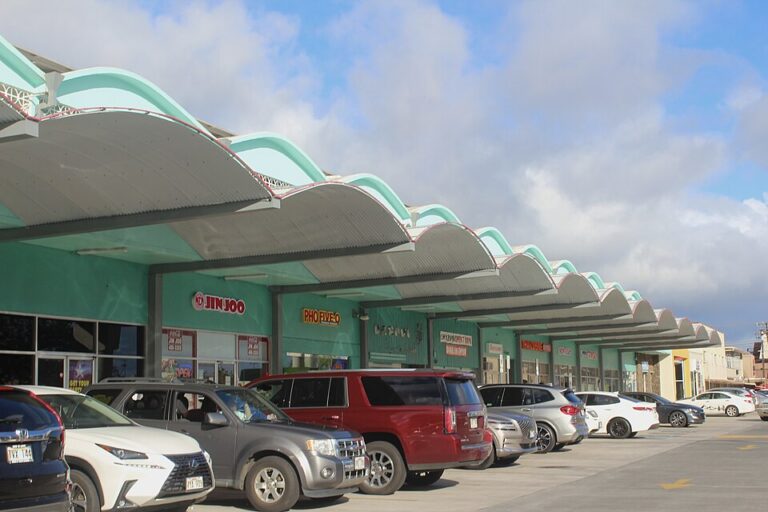
Waimalu Shopping Center, July 2021. Photo by Silverswordsweets, CC BY-SA 4.0; resized.

Key Takeaways
-
Waimalu drivers must carry at least Hawaii’s updated 40/80/20 liability plus $10,000 personal injury protection on policies issued or renewed on or after January 1, 2026. This applies everywhere on Oahu, not just Honolulu.
-
Parked-car damage is usually handled under collision coverage when another vehicle hits your parked car, and under comprehensive coverage for theft, vandalism, fire, or falling objects – subject to your selected deductibles.
-
Hawaii bans rating based on age, sex, marital status, credit, and (for new and renewal policies on or after October 1, 2026) zip code pricing, so cheap car insurance in Waimalu depends more on driving record, vehicle type, and coverage choices than personal demographics.
-
Uninsured motorist coverage and underinsured motorist coverage (UM/UIM) are optional but important, separate from collision and comprehensive, and Hawaii law requires written offers and clear written rejections, including stacking choices.
-
Call HawaiiCarInsurance.com at (844) 864-1313 for personalized Waimalu auto insurance quotes or request a quote online.
Waimalu, HI Car Insurance Overview
Waimalu drivers follow Hawaii’s statewide insurance requirements. For a parked-car loss, the cause of damage and your policy terms matter more than a general description of the neighborhood.
In plain English, car insurance for Waimalu drivers breaks into two buckets: required coverage (liability to pay others after a crash you cause, plus PIP for your own medical bills) and optional coverage to protect your own vehicle (collision, comprehensive, and extras). When people say full coverage, they usually mean a policy that bundles liability, PIP, collision, and comprehensive together.
HawaiiCarInsurance.com is operated by Drivers Insurance Agency, Inc. Use this guide to prepare coverage and claims questions, then request an individual quote using your actual drivers, vehicle and selected limits.
Tell the insurer where the vehicle is actually garaged and how you use it. The prohibition on ZIP-code rating for new and renewal policies effective October 1, 2026 does not remove the need for accurate application information.
Hawaii Minimum Car Insurance Requirements (2026 Update)
Hawaii’s no-fault system provides PIP for qualifying medical and rehabilitation expenses regardless of fault. Ask the insurer which policy applies to an injured person. PIP does not repair damage to your parked vehicle.
For policies newly issued or renewed on or after January 1, 2026, the required minimums are:
-
$40,000 bodily injury per person
-
$80,000 bodily injury per accident
-
$20,000 property damage per accident
-
At least $10,000 in personal injury protection for medical and rehabilitation costs
Optional wage loss coverage can be purchased separately if you want income-replacement protection beyond PIP medical benefits. These minimums apply to Waimalu drivers just like those in Honolulu, Pearl City, Kailua on Oahu, and Hilo. Lenders typically require full coverage – including collision and comprehensive – on financed or leased vehicles.
Higher liability limits than state minimums provide better financial protection. Relying on minimum coverage leaves you financially vulnerable if you cause a serious multi-car crash. A Waimalu family with a newer SUV might consider 100/300/50 or higher limits to protect household assets.
Types of Coverage Waimalu Drivers Commonly Carry
When you compare quotes or review your auto insurance premium, here is what each coverage type actually does.
Required coverages:
-
Bodily injury liability – pays for injuries you cause to other people in a crash where you are at fault
-
Property damage liability – pays for damage you cause to someone else’s vehicle or property
-
PIP – covers your own medical and rehab expenses regardless of fault, minimum $10,000 per person
Optional coverages:
-
Collision – protects your own car from damage caused by hitting another vehicle or object, including most parking-lot accidents, minus your collision deductible
-
Comprehensive coverage – protects against non-collision damage such as theft, vandalism, fire, flood, falling tree branches, broken glass, or animal damage; many of these risks affect parked vehicles
-
Full coverage is a convenient shorthand for a policy with at least liability, PIP, collision, and comprehensive, sometimes including rental reimbursement and towing; there is no single legal definition
Collision and comprehensive coverage are especially important for financed or newer vehicles, since lenders almost always require them.
Hawaii insurers must offer UM and UIM for qualifying injuries involving uninsured or underinsured drivers. Review coverage and stacking choices and any required written rejections under HRS § 431:10C-301. These are separate decisions from collision and comprehensive.
Non-owner coverage may suit some people who occasionally borrow or rent, but regular access to a household vehicle can make it unsuitable. Ask an insurer about eligibility and coverage rather than assuming the borrowed vehicle’s damage is covered.
Parked-Car Damage in Waimalu: Collision vs. Comprehensive
Waimalu drivers often wonder how insurance responds when their vehicle is damaged while parked at home, at Pearlridge Center, or along Kamehameha Highway.
-
If another vehicle strikes your parked car, ask about a liability claim against that driver and your own collision coverage. Liability acceptance, coverage and recovery timing are not guaranteed.
-
A vehicle hit-and-run is generally a collision situation, not automatically comprehensive. Ask the insurer which purchased coverage applies.
-
Theft, vandalism and falling-object damage may fall under comprehensive, subject to covered causes, exclusions and deductibles. See NAIC coverage guidance.
Never assume a specific coverage applies without checking your declarations page and policy language. Call your insurer or agent promptly after any parked-car damage for guidance on which coverage might respond. Do not assume you will have access to private security cameras or surveillance footage.
How to Document a Parked-Car Claim in Waimalu
Solid documentation helps when you file auto insurance claims, especially for parked-car damage in condominium lots, shopping-center parking structures, or on residential streets.
-
Prioritize safety and call 911 for an emergency. Avoid confronting anyone or moving an unsafe vehicle.
-
Record when you discovered the damage, the possible incident window and the exact parking location.
-
When safe, photograph damage, nearby landmarks, debris and parking-space details.
-
Ask willing witnesses for contact details and preserve any note left by another driver.
-
Contact police as appropriate for theft, vandalism or a hit-and-run and retain any report number.
-
Notify the insurer promptly and keep the claim number, adjuster contact and a record of conversations.
Do not expect same-day inspections or instant fault decisions. The process takes time.
Fictional Waimalu Claim Scenarios (For Illustration Only)
The following three scenarios are entirely fictional and for educational illustration only. They are not based on actual Waimalu events, do not reflect real claim outcomes, and do not guarantee coverage for any similar situation.
Scenario 1 – Overnight vandalism at an apartment complex. A fictional 2022 Honda Civic parked overnight at a Waimalu apartment complex in March 2026 is keyed along both doors with a broken side mirror. Comprehensive coverage would likely be considered since vandalism is a non-collision loss, subject to, say, a $500 comprehensive deductible. Photos, a police report number, and prompt reporting help the adjuster process the claim. If rental reimbursement coverage was purchased, it may help pay for a temporary car while repairs are completed.
Scenario 2 — Another vehicle strikes a parked truck. In this fictional example, a driver leaves a contact note after backing into a parked Tacoma. The owner can discuss a liability claim with the other driver’s insurer and ask their own insurer about collision coverage. A deductible may apply to the owner’s claim; reimbursement or recovery is not guaranteed. Rental benefits require the applicable coverage and eligibility.
Scenario 3 – Storm damage from a falling tree limb. A fictional 2019 Subaru Outback parked on a Waimalu side street during a windy January 2027 storm suffers a crushed windshield from a fallen tree limb. This is usually a comprehensive claim, subject to that deductible. The driver should take photos, contact the insurer, and avoid removing debris unsafely. Rental coverage, if purchased, may apply while the windshield and roof are repaired.
No repair prices or claim outcomes are promised in these examples. The adjuster’s findings, actual damage and policy terms determine how a real loss is handled.
Deductibles, Repair Estimates, and Rental Coverage
A deductible is your portion of an eligible covered loss. It may be deducted from a settlement or addressed in repair payments, so ask how it will be handled for your claim. Compare deductible options with actual quotes and consider whether you can afford that amount after a loss.
After a covered collision or comprehensive claim, the typical process looks like this:
-
Report the damage and ask what documentation or inspection is needed.
-
Obtain the requested estimate and discuss covered repairs, deductibles and any supplements with the adjuster.
-
Clarify the repair authorization and payment process before major work begins, while taking reasonable steps to prevent further damage.
Ask how the insurer works with your chosen repair shop, whether estimates differ, and who authorizes additional work discovered during repairs. A preferred-shop arrangement does not guarantee a faster inspection or completion date.
Rental reimbursement is an optional add-on that helps pay for a rental car when your insured vehicle is undrivable due to a covered loss, usually with a per-day dollar limit and a total maximum per claim. It does not apply for routine maintenance, mechanical breakdowns, or excluded losses. Waimalu drivers who rely on their car for commuting to Honolulu or Pearl Harbor should think about rental coverage when choosing policy options – not after an accident happens.
What Affects Waimalu Auto Insurance Premiums (Within Hawaii Rules)
Many national articles cite age, credit score, and zip code as major rating factors, but Hawaii law is more restrictive. Waimalu drivers benefit from unique state protections.
Prohibited rating factors in Hawaii:
-
Age, sex and marital status
-
Credit bureau rating
-
ZIP-code-based rating for new and renewal policies effective October 1, 2026, under Commissioner’s Memorandum 2026-2PC
County-based rating or other approved actuarial methods may still reflect some geographic risk differences, so Oahu rates may differ from Maui or Hawaii Island in general.
Lawful factors that still affect your premium:
-
Driving record – tickets, at-fault crashes, and DUI history
-
Prior claims frequency and severity
-
Annual mileage and years of driving experience
-
Vehicle make, model, year, and value
-
Vehicle use – personal commuting vs. business
-
Chosen coverage limits and deductibles
A driving violation or claim can affect pricing or eligibility, but there is no universal percentage increase or fixed dollar premium for every driver. Obtain an individual quote and ask which information the insurer used.
Finding Cheap Car Insurance in Waimalu Without Cutting Protection
Compare coverage and total cost together. A lower premium may come with a larger deductible, different limits or fewer optional benefits.
Use the same drivers, vehicles, limits, PIP and UM/UIM selections, deductibles and policy term across quotes. Ask for a written breakdown of payment fees and optional benefits.
Ways to pursue cheaper car insurance rates without gutting protection:
-
Select a deductible you can manage after a loss.
-
Discuss coverage changes before removing physical damage protection, including any lender requirements.
-
Ask which discounts actually apply to your household and compare the resulting total cost.
-
Keep application details current and report claims within applicable requirements.
Review the policy at renewal and when drivers, mileage, vehicles or use change. A review helps keep coverage accurate; it does not guarantee a lower premium.
UM/UIM, Stacking, and Non-Owner Options Under Hawaii Law
UM/UIM may provide benefits for qualifying injuries involving uninsured or underinsured motorists. It does not replace collision coverage for a parked vehicle.
Discuss the required offers, coverage elections and written rejections with your insurer. Keep copies of the documents with your declarations page.
Stacking concerns the combination of applicable UM/UIM limits. Ask how your policy and household arrangements affect the choices; do not assume limits combine automatically or that the answer depends only on the number of vehicles on one policy.
UM/UIM is separate from collision: UM/UIM focuses mainly on injuries from uninsured or underinsured drivers, while collision applies to damage to your own vehicle regardless of the other driver’s insurance status.
Ask whether a non-owner policy is suitable for the specific borrowing or rental arrangement. Frequent access to a household vehicle, business use and delivery or rideshare work require separate discussion. Physical damage to the borrowed vehicle is generally outside non-owner liability coverage.
Waimalu vs. Nearby Cities: How Location Still Matters
When you move or change your driving pattern, tell the insurer your actual garaging address and vehicle use. That remains necessary even when ZIP-code rating is prohibited.
Review the policy before shipping a vehicle or changing islands, including transit exclusions and effective dates. The insurer should explain which existing benefits continue and what needs updating.
How HawaiiCarInsurance.com Helps Waimalu Drivers Compare Quotes
HawaiiCarInsurance.com is a Hawaii-focused auto insurance resource operated by Drivers Insurance Agency, Inc. The site does not currently offer instant online quote forms. Instead, Waimalu drivers can call (844) 864-1313 for help comparing options from multiple carriers.
The basic phone quote process involves reviewing your current policy declarations (if available), confirming vehicle details and annual mileage, and discussing liability limits, collision and comprehensive choices, UM/UIM decisions, and extras like rental reimbursement or roadside assistance.
Helpful internal guides include:
Quotes are estimates only and do not bind coverage until the insurer accepts the application and confirms an effective date. Never cancel an existing policy until new coverage is fully in force.
If you park in an apartment lot, at Pearl Harbor, or around Pearlridge, review your policy now – especially collision, comprehensive, and UM/UIM – rather than waiting until after a parked-car claim to discover gaps.
Waimalu Car Insurance FAQ
Do I need full coverage on an older car I park in Waimalu?
Hawaii law does not require collision or comprehensive on any car. The legal requirement is liability (40/80/20 on new and renewal policies from January 1, 2026) plus at least $10,000 PIP. Lenders, however, typically require full coverage on financed vehicles.
If you own an older car outright, estimate its market value and compare that against your collision and comprehensive premiums plus deductibles. In some cases, it may be reasonable to drop one or both optional coverages while keeping solid liability limits. Talk with an agent before making that decision so you understand how parked-car damage, theft, or storm losses would be handled without those coverages.
Does Hawaii car insurance cover me when I drive a rental car on another island?
Most Hawaii auto insurance policies extend liability coverage to temporary substitute or rental vehicles within the policy territory, but collision damage to the rental may not be covered the same way as damage to your insured vehicle. Waimalu drivers renting cars on Maui, Kauai, or Hawaii Island should confirm with their insurer how liability, collision, and comprehensive apply to rentals, and review any rental company waivers before declining them. Policy language varies by insurer, so rely on your actual policy and agent for specific answers.
Will my Waimalu car insurance go up after a parked-car claim?
Claim frequency and severity can affect future premiums, but each insurance company uses its own filed rating plan and underwriting rules, so there is no universal answer for all Waimalu drivers. Many insurers treat comprehensive-only losses (like vandalism or falling objects) differently from at-fault collision losses when adjusting car insurance rates. Before filing a very small claim barely above your deductible, ask your agent how it might affect your premium. Safety and timely reporting remain the priority.
Can I get car insurance in Waimalu if I don’t own a car but borrow one regularly?
Possibly, but regular access to a household car may make non-owner coverage unsuitable. Disclose who owns the car, where it is kept and how often you use it. Ask the insurer whether you should be listed on the vehicle owner’s policy or need another arrangement.
What should I keep after reporting parked-car damage?
Keep photos, the discovery date and location, witness or other-driver details, any police report number, estimates, receipts and insurer correspondence. Record approval and rental end dates in writing. Good records help explain what happened but do not guarantee a particular claim outcome.